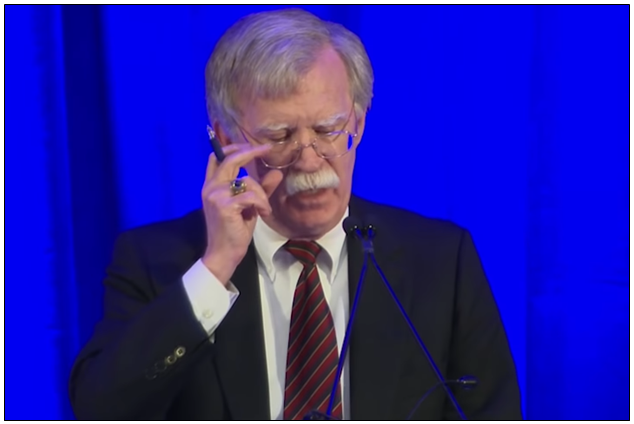
John Bolton spent years telling anyone who would listen that the people who worked for Donald Trump could not be trusted with the nation’s secrets. He has now stood in a federal courtroom in Maryland and admitted that he was one of them. He pleaded guilty to one count of willfully retaining national defense information. The other seventeen counts against him were resolved by the same deal. The question left for the judge is how many years, if any, he will spend behind bars for it.
What He Actually Did
While he was national security adviser, Bolton kept detailed personal notes of his work. Those notes included information classified as high as Top Secret and Sensitive Compartmented Information. They covered foreign military plans, covert action programs, and intelligence drawn from human sources and intercepted communications. He later copied more than a thousand pages of those notes into diary-style entries. He emailed and messaged them to family members who had no security clearance so he could use the material for the memoir that made him a public critic of the administration he had served. The account that held the material was later hacked. He reported the breach. He did not tell the government that the account contained classified information from his time in office. The documents stayed in his possession until the search of his home and office.
What He Admitted in Court
On June 26, 2026, Bolton stood before the judge and changed his plea. He admitted guilt to a single count of retaining national defense information. In open court he said he was sorry for it. The plea agreement capped any prison term at five years, even though the statute allows ten. It required him to pay a fine of 2.25 million dollars, half within days of sentencing. He forfeited his government pension. He agreed to a debriefing with intelligence officials and up to one hundred hours of community service. The remaining counts were to be dismissed once the sentence is imposed. He retained the right to withdraw the plea if the judge went beyond the five-year ceiling or the agreed fine.
🚨JUST FILED🚨
John Bolton’s legal team is asking a judge to sentence him to probation in his classified documents case.
“After a lifetime of illustrious
service and good works, Ambassador Bolton should never have to fear he will die in prison.”Bolton is facing up to five years in prison and is expected to be sentenced on December 4, 2026.
Bolton has agreed to pay a $2.25 million fine.
— Breanna Morello (@BreannaMorello) October 31, 2026
What the Lawyers Are Asking For Now
The government and the defense have filed their sentencing papers. Prosecutors want the full five years in prison plus three years of supervised release. Their memorandum treats the conduct as a serious breach that put national security at risk and that requires a sentence strong enough to deter others who hold high office. Bolton’s lawyers have filed a lengthy memorandum arguing for probation only. They point to his age, his decades of public service, his acceptance of responsibility, his cooperation after the plea, and the practical difficulties of protecting him inside a federal prison given threats from Iran and its proxies. More than a hundred letters of support accompany the filing. They say a probationary sentence would punish him without being greater than necessary and would still allow him to continue some form of public work.
ANALYSIS: @TheJusticeDept BOLTON SENTENCING MEMO RECOMMENDS PRISON
– ‘A sentence of 60 months imprisonment, with a three-year term of supervised release, and the agreed-upon (2.25M) fine is sufficient, but not greater than necessary, to satisfy the goals of sentencing’
– ‘Defendant Bolton has gambled with the national security of the United States. He has exposed his country to harm..’
– ‘Over the course of 17 months, Mr. Bolton systematically exposed this nation’s most sensitive of secrets to cyber theft…’
– ‘Given his decades of experience with classified information, Mr. Bolton’s actions…demonstrate aggravated, willful conduct.’
– ‘And unlike many cases involving violations of 18 U.S.C. § 793, this Court does need not to speculate whether harm to national security ultimately materialized..’
KEY ARGUMENT: “Mr. Bolton’s ongoing exposure of real-time classified national defense information, by transmission over unsecure, non-governmental communications jeopardized the most sensitive information held by the United States.”
MY NOTES: @HillaryClinton’s unsecured personal server used for State Dept. business also contained intelligence at the highest classification levels.
Then Director @comey argued in 2016 no reasonable prosecutor would bring the case because they lacked evidence of intent.
Critics disagreed and said Clinton’s purchase of the server confirmed her intent to take records outside secure government systems for sensitive and classified information.
DOJ BOTTOM LINE: “Mr. Bolton’s sentence should send the message that senior federal officials like him are not above the law; they must follow the same rules, regulations, and laws as everyone else.”
NOTE: Separate Post Analyzes Sentencing Memo From Bolton’s Legal Team
Read DOJ 37 page memo after the jump:
— Catherine Herridge (@C__Herridge) November 2, 2026
What Happens Next
The judge is not bound by the five-year cap in the way the parties hoped. He must calculate the guidelines himself. Bolton can still walk away from the plea if the number comes in higher. No sentence has been imposed yet. The man who once sat in the room where national security decisions were made is now waiting to learn whether that same system will send him to prison for the way he handled the secrets he carried out of it. The papers are filed. The arguments are on the record. The decision is the court’s.